Resources
Browse our Resources by Topic:
Informational Flyers
Flyers that summarize product lines and product use scenarios.
Directions for Use
Information on the normal day use and care of our targets, FluoFlow® and OptiBlox® tools.
Product Use Guides
How to use our devices to characterize imaging systems, and understand more in-depth about our tools.
Change Notices
Updates to our product line and explanations of changes.
Peer-Reviewed Publications
Publications highlighting how our products can be used in your development cycle and how clients have used them.
Software
Downloadable software required to use our tools.
Videos & Webinars
Watch our short videos that explain our product line or delve deeper into the science with our webinars.
FAQs
An inventory of frequently asked questions organized by product type. Please refer to these in understanding what options are available.
Informational Flyers
Fluorescence Reference Targets
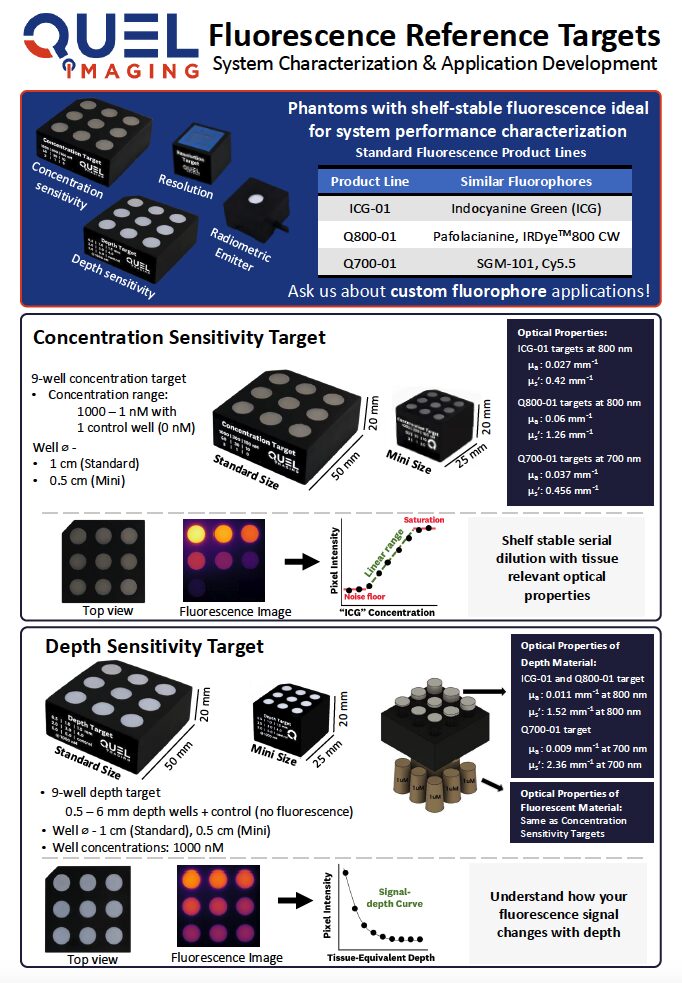
System Characterization & Application Development: Phantoms with shelf-stable fluorescence ideal for system performance characterization. Flyer gives an overview of target types.
Fluorescent Phantoms & Services
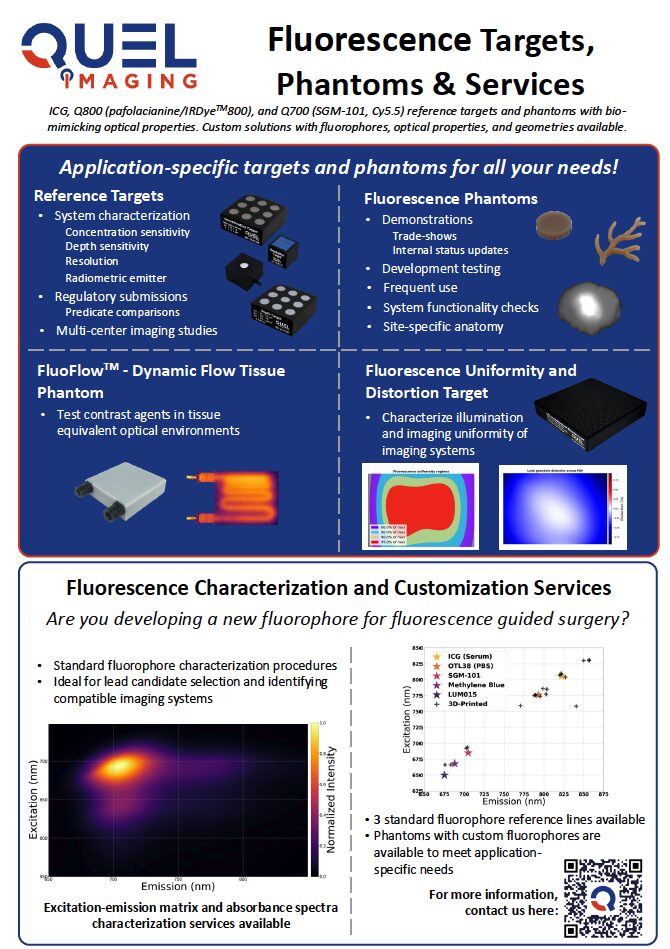
ICG, Q800 (pafolacianine/IRDyeTM800), and Q700 (SGM-101, Cy5.5) reference targets and phantoms with biomimicking optical properties. Custom solutions with fluorophores, optical properties, and geometries available.
OptiBlox & FluoFlow Phantoms
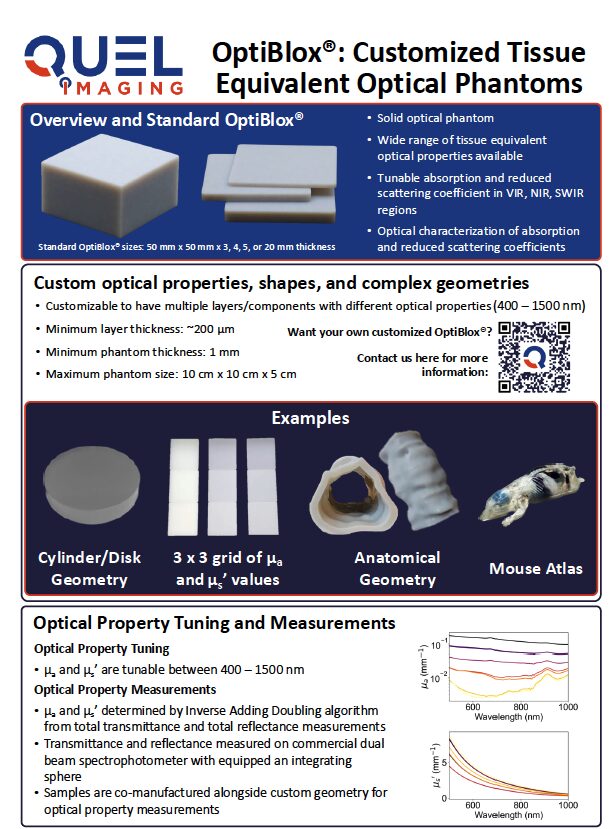
Overview of both standard and custom options. Solid optical phantoms, wide range of tissue equivalent optical properties available.
Radiometric-Emitter Target & Photobleaching
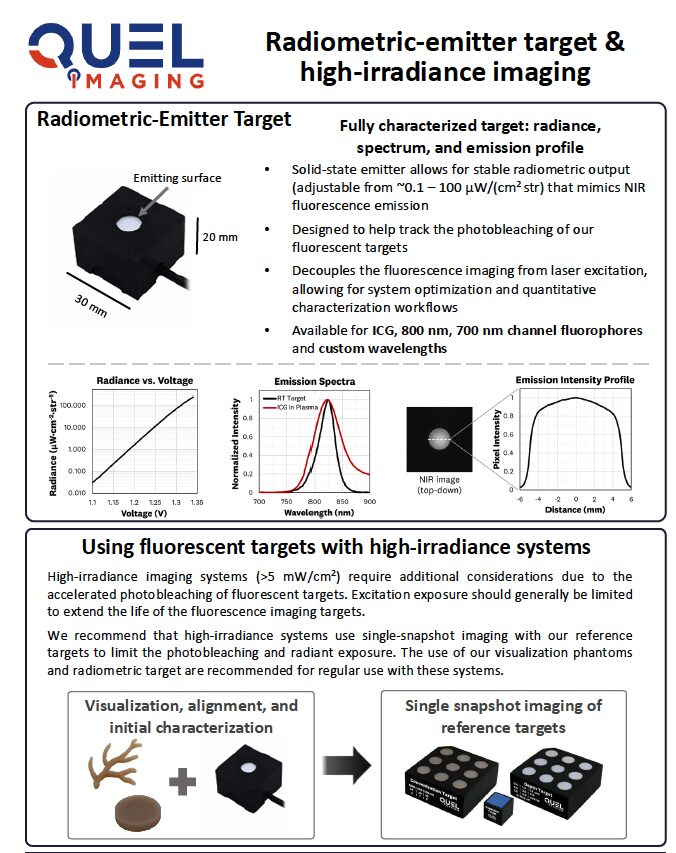
Fully characterized target: radiance,
spectrum, and emission profile. Available for ICG, 800 nm, 700 nm channel fluorophores
and custom wavelengths.
Directions for Use
Reference Target Product Family
Version: r0-8
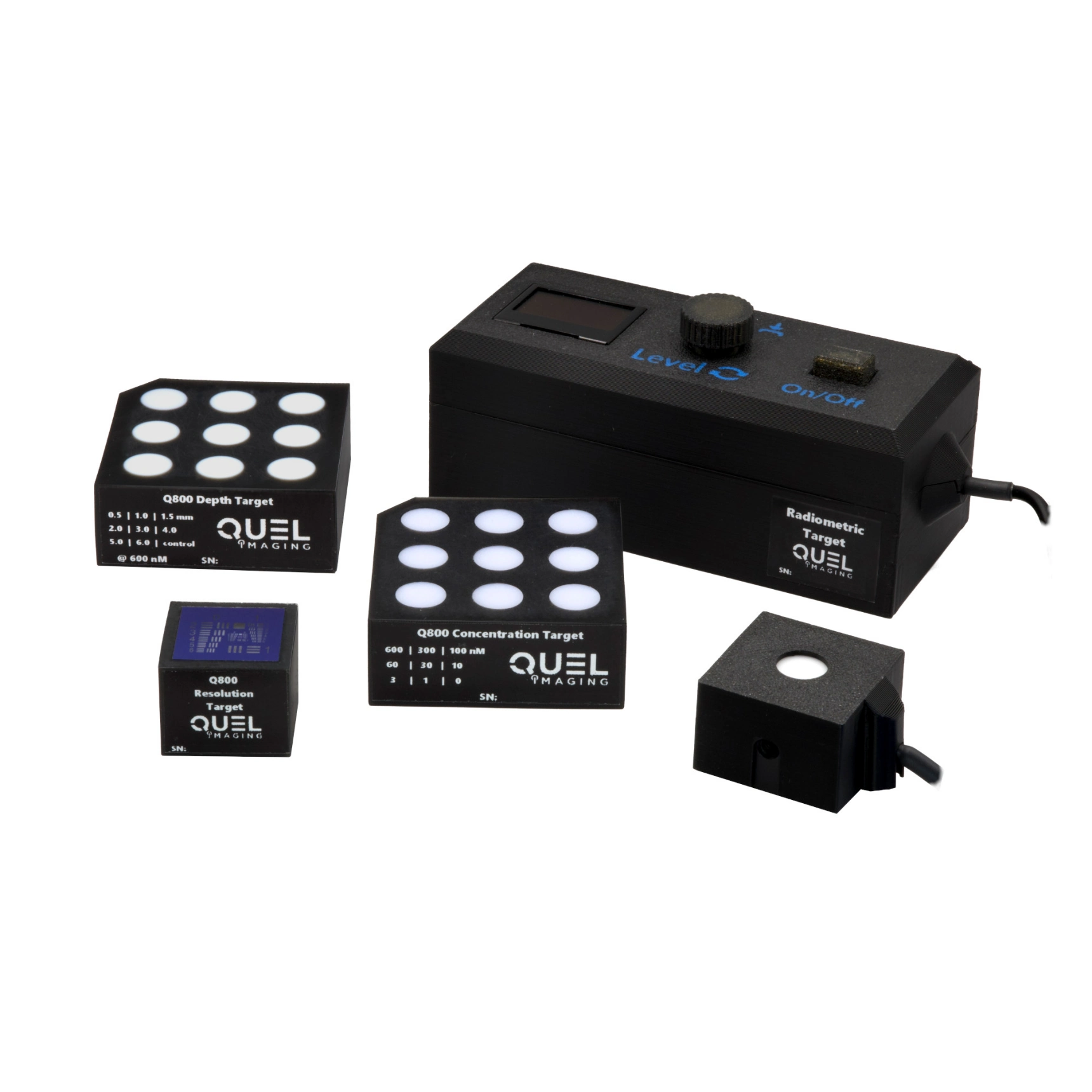
Information on the normal, day-to-day use and care of the Concentration, Depth, Resolution and Radiometric Emitter Targets.
FluoFlow®: Dynamic Fluorescence Phantoms
Version: r0-0

Information on the storage and cleaning procedures to use this phantom with fluorophores.
OptiBlox®: Tissue-Mimicking Optical Phantoms
Version: r0-0

Information on the storage and cleaning procedures for OptiBlox®: Q-T phantoms.
Product Use Guides
Use Guide: Concentration Targets
Version: r0-8
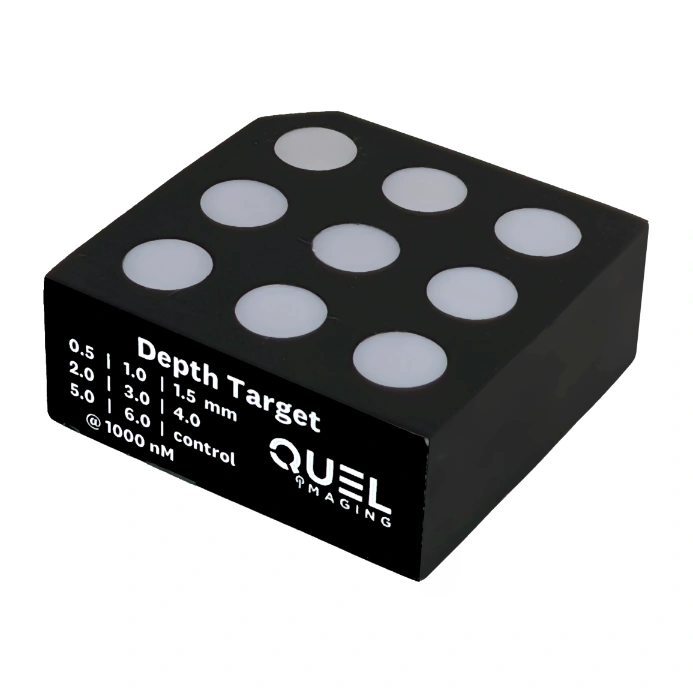
How to characterize the fluorescence sensitivity of an imaging systems using this shelf-stable enhancement of a common serial dilution.
Use Guide: Depth Targets
Version: r0-8
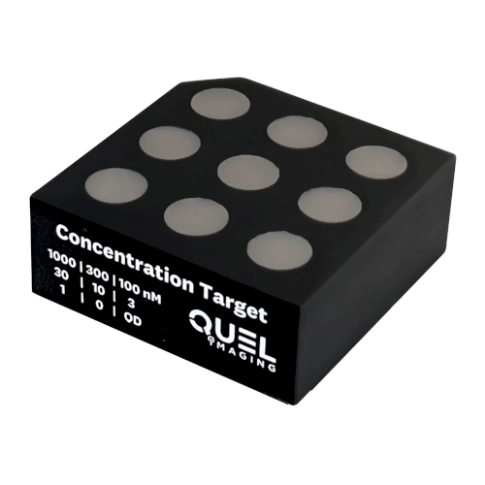
How to characterize the dependence of fluorescence signal on the depth of tissue-mimicking materials. This is a leveling-up of that thin slice of bacon or bologna you were using…
Use Guide: Resolution Targets
Version: r0-7
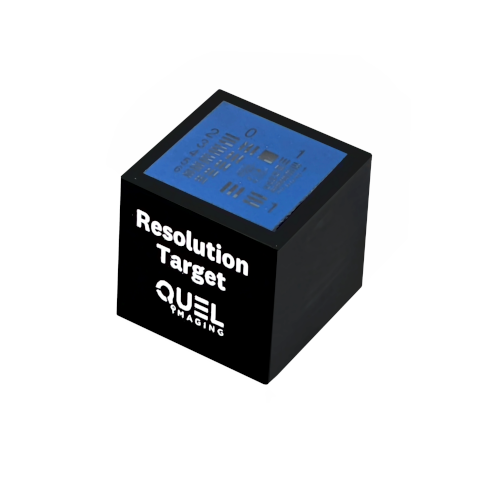
How to characterize the spatial fluorescence resolution of an imaging system. What is the smallest feature your system can resolve in fluorescence mode?
Use Guide: Radiometric-Emitter Targets
Version: r0-8
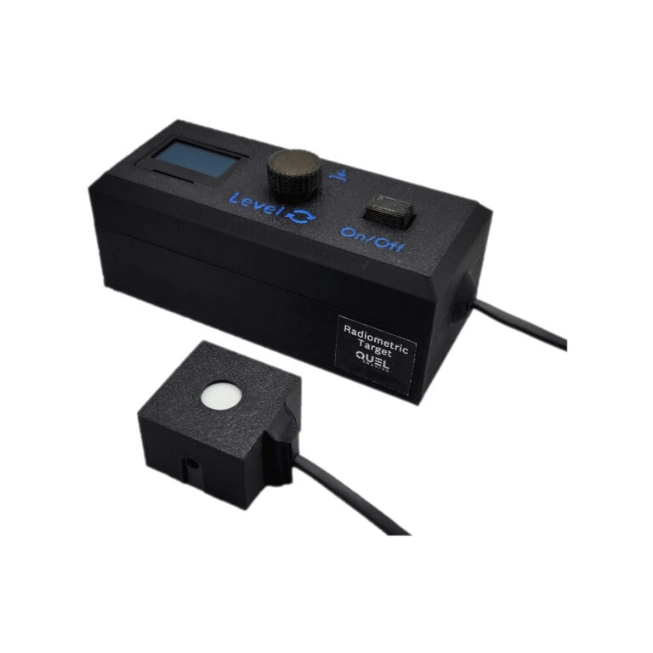
How to mimic fluorescence by emitting light of a known wavelength and adjustable radiance. This is a stable reference to compare fluorescence signals and track system performance or photobleaching.
Use Guide: Uniformity and Distortion Targets
Version: r0-8
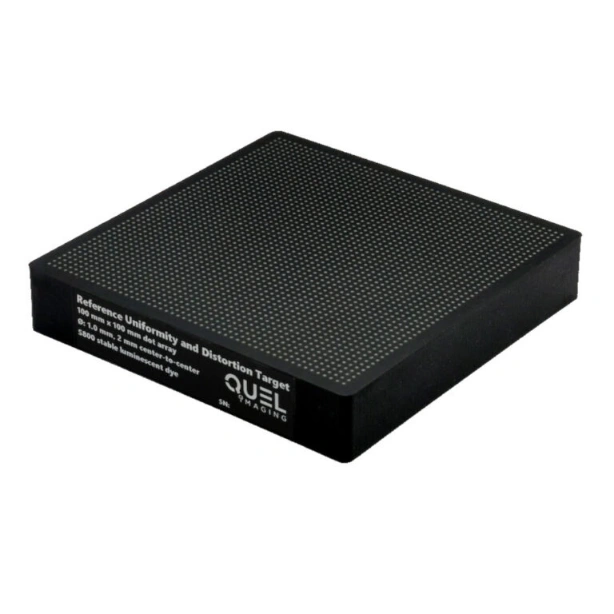
How to characterize imaging system accuracy related to fluorescence illumination and capture efficiency, as well as spatial distortion. Let’s hope your system doesn’t surprise you with a not-so-happy accident.
Change Notices
Design Change Notice O38 – Q800
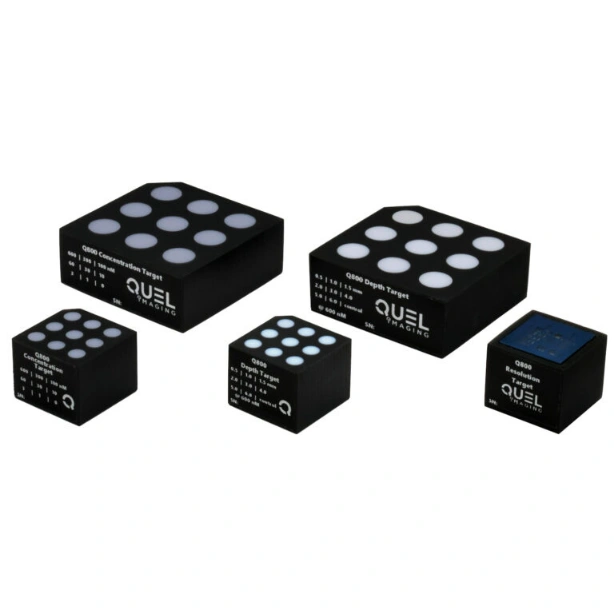
The name and design of our OTL-38-equivalent product line of standard and mini fluorescence reference targets have been updated to the new “Q800” product line. The overall design remains largely unchanged with new changes implemented to 1) maximize the usability of the targets 2) Improve targeted optical properties and 3) minimize manufacturing variability.
Peer Reviewed Publications
Relevant Publications
A Phantom for Fluorescence Uniformity and Distortion Assessment of Near-Infrared Fluorescence Guided Surgery Systems
Journal of Biomedical Optics (2025)
Toward fluorescence digital twins: multi-parameter experimental validation of fluorescence Monte Carlo simulations using solid phantoms
Journal of Biomedical Optics (2025)
Fluorescence Reference Target Quantitative Analysis Library (in pre-print)
ArXiv (2025)
AAPM Task Group Report 311: Guidance for performance evaluation of fluorescence-guided surgery systems
Medical Physics (2024)
Assessment of open-field fluorescence guided surgery systems: implementing a standardized method for characterization and comparison
Journal of Biomedical Optics (2025)
3D-Printed Tumor Phantoms for Assessment of In Vivo Fluorescence Imaging Analysis Methods
Molecular Imaging and Biology (2023).
Customer Publications
Clinical Integration of NIR-II Fluorescence Imaging for Cancer Surgery: A Translational Evaluation of Preclinical and Intraoperative Systems
Cancers (2025)
Fluorescence Lifetime Endoscopy with a Nanosecond Time-Gated CAPS Camera with IRF-Free Deep Learning Method
Sensors (Basel) (2025)
Ambient Light Resistant Shortwave Infrared Fluorescence Imaging for Preclinical Tumor Delineation via the pH Low-Insertion Peptide Conjugated to Indocyanine Green
Journal of Nuclear Medicine (2023)
Mapping estimates of vascular permeability with a clinical indocyanine green fluorescence imaging system in experimental pancreatic adenocarcinoma tumors
Journal of Biomedical Optics (2023)
Software
QUEL -QAL

Python code for analyzing images of QUEL Imaging’s fluorescence phantoms and obtaining relevant metrics about the capabilities of your fluorescence imaging system.
Additional QUEL-QAL Resources
Get started quickly using theQUEL-QAL library. These resources provide quick-start guides and example use cases. Have a feature request? Join our developer community!
- GitHub Wiki: Getting started to advanced examples
- YouTube Playlist: Follow along to accelerate your data extraction
- Publication: Learn about our core architecture
Videos & Webinars
Giving Superpower to Surgeons: Enhancing Surgical Vision
An introduction to fluorescence guided surgery. This video provides a basic introduction to how fluorescence imaging works. It addresses common features and limitations of fluorescence visualization systems.
Save a Pig, Use a Phantom
An introduction to what phantoms are and how they can be used to characterize the performance of an imaging system. This video covers how optical engineers test imaging systems and how phantoms are made to mimic tissue optical properties. To learn more about phantoms please contact the QUEL Imaging team.
Tissue Isn’t Just a Bag of Water: Why This Matters
An introduction to how light interacts with tissue. This video covers how light interacts with the body during fluorescence imaging.
Reference Targets for Performance Characterization
An introduction to a specific type of optical phantom called a reference target. This video covers how reference targets can be used to perform system characterization of fluorescence imaging systems.
QUEL Imaging FluoFlow® 2-D Branching Phantom Prototype
This FluoFlow® optical phantom uses a generative design to represent a 2D-branching vessel structure. This target has integrated Luer-lock connectors and the bulk material has tissue-equivalent optical properties, suitable for testing with NIR fluorophores. The phantom can also be customized to have optical properties, which represent different types of tissue. In this video, 5uM ICG is pumped through the phantom at a constant rate.
Accelerating Clinical Translation with Optical Phantoms: QUEL Imaging & Blaze Bioscience [Webinar]
In this webinar, originally held on June 18, 2025, your can watch this dynamic panel discussion hosted by QUEL Imaging, featuring leaders in fluorescence-guided imaging as they share real-world insights into the clinical translation of optical technologies.
Moderated by QUEL Imaging CEO and co-founder Ethan LaRochelle, PhD, this session explores how optical phantoms support the development, validation, and regulatory readiness of fluorescence imaging systems.
FAQs by Topic